skip to main |
skip to sidebar
We are taking a semi-hiatus in Chicago, grouping all our material together and taking weekend trips around the area. Look out for snippets of our Madison/Milwaukee trip soon.
--Nona and Emma

 Michele Wallace: New York-born feminist, author, cultural critic, professor of English at City College and the CUNY graduate center.
"College is a major agent of dissemination for feminist ideas. When I was a teenager, I saw a lot of activity in terms of feminism with my mother [artist Faith Ringgold] and activists in New York, but if it had not been backed up by one of the first women's studies programs here in City College, I don't know what it would have meant for me. I got to read women writers and also just see the struggle of the women faculty through this program. [Feminism] was always reinforced by school...and outside of New York, the academic part of it was even more important."
 Sharyn: 28, native of Sheepshead Bay, Brooklyn, bartender, graphic design student, former punk. Isn't sure what feminism means, "but do I support women's rights, do I feel empowered? Definitely."
"I come from a really traditional family...my mother's family is from Israel and my father's side, they're all Moroccan. Since I was a child, it has been banged into my head that I am to speak quietly and not have too many strong opinions and what I should be really good at is learning how to clean the house and cook food and raise children...When I was little, and kids would go and play in the park, I wasn't allowed to go, [my family] wanted me to stay home and mop the floors. I was the first one of my family born in the United States, and I remember thinking like, 'That's cool for you guys, but I'm American and I can do whatever I want.' I remember being really young and being so angry about that."
 Pia: 25, raised in Crown Heights, dancer, choreographer, dance studio manager, afterschool teacher. Wouldn't consider herself a feminist.
"The first step to getting racial equality in an American patriarchal society is getting some perks for your men, and then hoping that your men are going to turn around and try to get some perks for you. I feel like that's why a lot of Black women don't label themselves as feminists...they'll label themselves under racial activists and then bring in women's issues as a second-tier thing. We are grappling with a whole different set of issues that just come first--I'm always reminded that I'm Black before being reminded that I'm a woman."
(Photo by Sadye Vassil)
 Mehiko: 23, one of the few non-Hasidic Williamsburg natives, born in Japan, law student at CUNY Law School, feminist.
"I would definitely like to see more girls involved in sports. I just think that athletics is a really important part of growing up, and I think it instills values you can't get anywhere else...Even now, you still get your boy a little football for Christmas and your girl a Barbie doll. I know some parents make a conscious decision not to do that. But I want it to be something that's unconscious...I want girls to want to do sports. It helps with body image later on, too, because you see your body as a tool rather than just an object of desire."
 Jessica: 23, lifelong Brooklynite, stay-at-home-mom to Olivia, her 4-year-old daughter, aspiring illustrator or interior designer, feminist.
“Since I have a daughter, I’m really aware of the media and how it degrades women. It starts from a really young age. Like those Bratz Dolls—Olivia doesn’t have any of those, thank god—but they look like strippers. Even if you don’t watch TV, just walking down the street people are judging women everywhere. I don’t ever want my daughter scrutinizing herself or comparing herself to the way women are ‘supposed’ to look. [laughs] Part of me wishes that mothers would get involved in an anti-Bratz campaign or something.”
 Erica Jong (above, in her East side home): New Yorker, novelist, poet, media personality, pioneer of the sexual revolution, Second Wave feminist.
On young women, sex, and role models:
"I think young teenagers all need an older woman--maybe not our mother, since we are all rebelling against her at that age--who she trusts, with whom she can sort these things out. I had someone like that to talk to about promiscuity and my feelings about love and sex. Maybe every woman ought to have a mentor. Mentoring is the new feminism. I really believe that the next stage of feminism is going to be older women and younger women working together."
 Kathleen Hanna (left, in her SoHo neighborhood): activist, teacher, musician, feminist; early Riot Grrrl upstarter, singer/songwriter in Viva Kneivel, Bikini Kill, Julie Ruin, Le Tigre.
On her falling out with Riot Grrrl:
“A lot of the cool people left, including myself…It's a problem on its own to look at anything as your savior, its this kind of Christian capitalist way of looking at things. But when the thing that’s totally saving your life is now choking you to death, the language that saved your life is being used to murder you, it's really incredibly painful…I haven’t moved away from feminism, and I haven’t become softer and "nicer feminist" style or something, I’ve just really gotten bored of myself and want to look towards other people...It’s the arrogance of youth that made anything happen. I am glad I opened my mouth even though I didn’t fully know what I was saying…I had all the knowledge [about feminism] I needed because I lived it, and that’s the part of it that stands the test of time, but there is another part which is arrogant and not feeding into a positive sense of continuum.”
 Anya Kamenetz (right, on her terrace in Williamsburg): 28, originally from Baton Rouge, journalist, personal finance advisor, author of Generation Debt. Considers herself a feminist.
"Women in general are bringing very high stakes to the work world. We are one of the first generations of women raised with the belief that we are going to work, and that it's not just about being a breadwinner. Men have their own pressures, like this intense fear of not succeeding and that he has to make his mark in the world. But for women, I think it’s more about finding a full expression of who you are in the work world, because if you don’t, you should be fulfilling the higher purpose of having children. A lot of women I know apply that binary to their lives."
 Jessica Valenti (right, at a cafe in her Astoria neighborhood): 29, founder and executive editor of the blog Feministing, activist, author of Full Frontal Feminism.
On Girls Gone Wild:
“The way you deal with a phenomenon like that is to encourage women to be critical thinkers—ask her, ‘Why are you doing these things? Why does it make you feel powerful to get drunk and show your boobs?’ The myth of sexual purity is the real thing that is screwing up young women, not the fact that they are being sexual. Both Girls Gone Wild and abstinence-only [campaigns] are about dictating what young women should do. So no wonder why we are completely sexually confused. When you’re telling a woman that her moral compass is between her legs, that can really fuck her up.”
 Laura Kipnis: cultural and media critic, professor of media studies at Northwestern University, author of Against Love and The Female Thing. A feminist, but tries to avoid “being typecast as the pro-sex feminist…I get bored when people only ask me to write about those issues.”
On beauty:
"The hidden 'double shift' for women is spending an awful lot of time worrying about the way they look…It’s not like women don’t realize this [impediment], but I think they feel defeated by it. You can be self-aware of these things and still be on a constant diet. You can have read every feminist book on your bookshelf and still have issues about food and eating and the way your hair is styled. I guess you're not required to subscribe to this kind of regime, but it helps you blend in and offers you more sexual opportunity...because that's still the way the heterosexual world is organized, despite all the supposed female progress."
 Jeanie (left, outside of Café Pick Me Up in the East Village): 23, raised uptown in Manhattan, actress, former champion fencer, temp at a banking software company. Considers herself a feminist.
“Growing up in New York surrounded by strong women doing their own thing, it was much easier to be an individual, and be supported for that...My sister and I were always fighting this idea of what it was to be a “girl." We were very physical tomboys. I remember one summer, we went to this daycamp upstate, and I was the only girl playing hockey with the boys. I wasn’t afraid of being sweaty or being loud…we have always had that sense of ‘We’re different, and we’re proud of that.'”
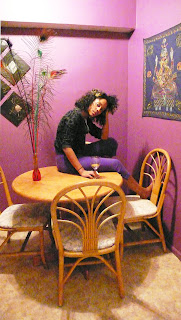 Tecla (right, in her newly bought apartment in the Bronx): native New Yorker, 25, preschool teacher, plays keyboard and does backup vocals in the all-girl band Sweetie. Considers herself a feminist.
“Sweetie is a raunchy, raw, female, ‘I-don’t-give-a-fuck’ band. I like having that beautiful female vibe without having to deal with male energy. With men, there’s an unnecessary competition happening…their egos are tested. I know that women have their own issues with eachother, which is sad but true. But being with girl musicians feels like a more healthy, cohesive environment, where you can vibe in a pleasant way.”
Take a look at Sweetie's music video "17" on YouTube.
 Jennifer Baumgardner (right, on Broadway): author, activist, film-maker, Third Wave feminist.
“I feel nothing but excitement about the new generation of women. People say things all the time like, ‘It’s much worse now, if anything we’ve gone back.' People look at things like Girls Gone Wild or the fact that girls cut themselves, or violent body images issues, and think it’s worse. But it’s not true, it's not worse. The issue of early sexual contact for instance…certainly there are girls who aren’t self-protecting, but there’s also more girls in charge of their libido and having a sense of sexual expression, before they find themselves being 40 and finally getting their first vibrator.”
After Nashville, our entries are going to be short and sweet, purposely meant to be a tease so there will be some juicy stuff for the book! Our New York, Chicago area, and East coast journeys will be mostly snapshots and soundbites, with a stray longer entry here and there. Enjoy!
--Nona and Emma
We have coffee in a hipster part of Nashville with Rachel, the 24-year-old art and design director at American Songwriter magazine. Like Lauren, she grew up in Memphis, and she and her two sisters were raised by Southern Baptist parents. “My parents are conservative, but always gave us freedom with how we approached our talents. I grew up with the arts,” Rachel says. She came to Nashville “to do music—I was fascinated with how the DIY independent music scene was going in Nashville,” but wound up getting a business degree and eventually got interested in design.
 Rachel would consider herself a feminist, but “subtlely. It’s in my nature to feel empowered as a female. I always feel like I have to prove myself, even in the independent music scene, which I see as kind of a brotherhood.” Rachel describes herself as “quiet shaker.” She cites her parents as unlikely contributors to her progressive way of thinking. “My parents are both religious people, but they’re all about freedom of speech. My mom grew up in the hippie culture in Austin, but describes that time in her life as ‘before she found her faith.’” Regardless, she and her two older sisters “honed in” on their parents’ liberal past rather than their more traditional lifestyle later on.
Religion does play a role in Rachel’s life—“it’s a very quiet factor, but I treasure it.” The church she goes to “embraces the concepts of love between races and types of people,” and goes against the stereotype of close-minded Christianity. She thinks her anti-right-wing stance, and the fact that she is pro-choice, is “even more powerful because I am a Christian. It surprises people. I also get excited when I meet people who are both faithful and artists—because I sometimes feel like an outcast in either group.” Rachel feels much more adamant than Lauren about the importance of separation between church and state, and gets frustrated that the right-wing agenda uses the name of Christ.
Rachel is hopeful for the future of young women, and is eager for them to be included in what she calls the “creative class.” “I get encouraged when I find that needle in a haystack—a woman who is pursuing the male-dominated world of music or art. I think it’s getting better. People are finally allowing people to think for themselves and, little by little, boundaries are vanishing.”
--Nona
Check out what Rachel wrote on November 19th on her livejournal about our little chat!
After dinner with Caroline, we rush home to meet Lauren, another med student at Vanderbilt. Lauren, 23, grew up in Memphis, went to nursing school in Texas, and just moved to Nashville in April to get her masters in midwifery. Lauren echoes some of Caroline’s hesitance about current ob/gyn protocol, telling us that “women are often treated like machines.” She believes that the birthing process is a woman’s domain. “I don’t think there’s room in childbirthing for men. It makes things awkward when a male doctor enters, even though I do respect some male doctors. Midwives really believe in women’s bodies, and that they can do it on their own.”
Does Lauren consider herself a feminist? “I wouldn’t. I don’t have the clearest picture of what it truly is…but I have a definite need for men in my life. When I was getting into midwifery, I heard stories about feminists that are very anti-men, anti-establishment, ‘hear us roar.’ That’s not my heart. From what I know of it, feminism seems like an imbalance. But I do think women were created beautifully and created strong, and I want women to be able to fulfill that, even in childbirth.”
We ask her if there are any other issues that she is passionate about. “Yes,” she says. “Abortion. I’m very pro-life. I believe that every pregnancy is a gift from the Lord and that there is a life at the moment of conception. I volunteer at a Crisis Pregnancy Center, and I’ve worked with women  who have had abortions that feel like they have killed someone. I also see the lack of counseling given to pregnant women. I know women have their own choices, but I don’t think they know about the other options out there.” But Lauren thinks that if abortion was illegal, “there will be some women that will abort no matter what, so more women’s lives would be at risk.”
Lauren’s pro-life stance is directly related to her faith, which is extremely important to her. Emma asks Lauren if her political views are necessarily tied to her religion, and how she feels about separation between church and state. “That whole division is really hard for me, [because] my relationship with the Lord is everything in my life,” Lauren answers. “I don’t ever want to live a compartmentalized life; I strive to be the same person wherever I am.” Lauren sees the Christian right’s agenda as compatible with her views on women. “I don’t think our President is perfect by any means, and he professes to be a Christian. No matter how good a person is, they are going to make mistakes. But I believe Jesus supports women 100 percent.” Do pro-life male politicians have a place in legislating abortion if they don’t have a place in the delivery room? “My gut instinct is yes. Their position of being pro-life furthers knowledge and education, instead of them just wanting to have control of women.”
Lauren is concerned that too many young women “play around with sex,” and she believes in waiting to have sex until she is married. “I’m a virgin myself,” she tells us. “I grew up in a high school where most of my friends dated guys, and I was the girl that they came to, crushed, after they broke up with them. The girls were just giving themselves away…they were getting broken and torn apart. When I finally do get married, I want to be whole and not have had my heart broken.” But if Lauren were to counsel a young women on sex, “I’d maybe tell my own story, tell them about the risks, but I would also give them birth control.” Lauren doesn’t believe in abstinence-only education “because it’s not a reality. Girls need to know about STDs and pregnancy.” With both premarital sex or abortion, Lauren’s goal is “not to change or judge people, but to accept people, counsel them and give them advice. If a 16-year-old girl comes to me and still goes through with an abortion, I will still support her.”
--Nona
Discussion Questions:
Question 1
Question 2
After dropping off our friend Lucy at the airport, we drive to Caroline’s house in Nashville. Caroline, 26, is my back-in-the-day friend from Wesleyan. Raised in Montclair, New Jersey, she has been in Nashville for 3 years getting her medical degree at Vanderbilt.
Over thai food that night, Caroline (right and below, in a honky tonk on Broadway, Nashville's main stretch) tells us that she absolutely considers herself a feminist. “It’s something about myself that I have always known since I was young,” she says. Caroline describes her family as a “feminist household,” crediting both her mom and her dad for raising her that way. “My mom is outspoken but never really got to do some of the things that she was interested in because it was a different time.” She tells us that her mom, who is a teacher, regrets not getting professionally training until her late thirties, so it was important to her for children to have professional careers. “Both me and my sister are both off-the-beaten-path kind of people, but we are both in professional schools, and that’s not an accident. My mom wanted us to be able to support ourselves.” Caroline never took any women’s studies classes at Wesleyan—we both agree that the classes’ titles never quite popped out at us—but “a lot of my pleasure reading is non-fiction feminist books, like Manifesta.”
A couple years ago, Caroline had told me she wanted to be a obstetrician/gynecologist, but has since changed her mind about the culture around it. “The way women are treated, it is so impersonal and cold. There’s a whole atmosphere of talking about the woman like they’re annoying, speaking of them in very negative ways. It’s not geared to help women through the birth process. Emma, fresh with thoughts on midwifery from our interview with Kate, asks how homeopathic and natural procedures are raised in medical school. “The institution doesn’t teach it, but I see value in it,” Caroline replies. “I try to get everything I can out of medical education as it is now so I can make it more holistic in the future.” With feminism constantly on the mind during this roadtrip, I make the instant parallel of a woman who thinks, “If you can’t beat em, join em, then use the knowledge to beat em later.” It is an age-old feminist tactic for a woman to go along with the system until she gains a certain amount of power, then try to change things later.
Caroline wants to be successful, too, but she wants to “live like a human.” In many aspects of the medical field, she says, “you have to sacrifice your family for your career. I’m interested in pediatric or adult medicine, or maybe adolescent medicine or hospice. I want to have a life outside of medicine (as opposed to surgery). I like the idea of doing home visits or health care in the public schools or in community centers. You can achieve much more by considering a person's health in the context of their family situation or their home or school environment. " Is that why fewer women are surgeons? I ask. “Probably, because they are less willing to be in a chauvenistic, hierarchical environment.” And it may not be just that women are softer, but more that “there’s been a slow change in our culture where you can’t just boss everyone around. I don't see myself setting the world on fire, but I see me and my peers collectively changing medical education and the practice of medicine over time. ”
--Nona
Discussion Questions:
Question 1
Question 2
 photo by Sadye Vassil
Hi everyone,
As you may have realized, we’ve been taking a break in New York, interviewing all of the fascinating women in the city we were born in. But don’t worry…a few more Memphis and Nashville entries will be up soon, and a hint of what we discovered in New York will follow!
--Nona and Emma
 Alicja is singer and guitarist for an array of Memphis-based bands, including the Lost Sounds and the River City Tanlines. We meet her at the HiTone, an eclectic retro-styled rock club where she is tending door. On a break between sets, she pulls us into the back room for a chat, before shooing us back to see the bands for a special discount. She is clearly a fixture in the scene here, as every few moments the interview is interrupted by a hello or congratulations on her recent baby. Alicja (left, backstage at the HiTone) tells us she started playing music with girls in high school, but always related more to males in rock music. She found that guys would approach her and say they don’t often relate to music written by girls, but they liked hers.
Has she experienced any discrimination being a woman in the heavily male-dominated garage and punk scenes? She looks bored with the question, but lets us know “men always soundcheck you last, look embarrassed for you, and always try to give advice to you if you are in an all-girl band.” I ask her about how she relates to the tradition of ostentatious rocker front-women: “I’m a jeans and t-shirt kinda girl--I let my pride and vanity go out the door. I want to be able to play with the boys.” She admits though that she “stands out. But I use it to my advantage, without dressing slutty when I play.” The last time I saw Alicja play in Chicago, she was six months pregnant and rocking out in a flowing red dress, riling the crowd with her punk pregnancy performance. She tells us that she hopes that her newborn daughter will be impressed with her mom one day, that she’ll see her with a “flying v-guitar” and think “mom is a bad-ass.”
Does she relate to feminism? “I secretly get satisfaction from the feminist movement, but I have felt repelled by the term, and by women who can’t stand up for themselves without relating to the term. I know I am a great guitarist already.” Alicja’s attitude is typical of many woman musicians, who have felt singled out for their gender, and have traded irreverence and confidence for being pigeonholed. “I can’t live down the stereotype of always being a woman in rock. I don’t understand, women are not a race. We are not like the Aztecs or Eskimos. We are 50% of the world, why do we keep being defined as separate from it?”
--Emma
Discussion Questions:
Question 1

 Michele Wallace: New York-born feminist, author, cultural critic, professor of English at City College and the CUNY graduate center.
 Sharyn: 28, native of Sheepshead Bay, Brooklyn, bartender, graphic design student, former punk. Isn't sure what feminism means, "but do I support women's rights, do I feel empowered? Definitely."
 Pia: 25, raised in Crown Heights, dancer, choreographer, dance studio manager, afterschool teacher. Wouldn't consider herself a feminist.
 Mehiko: 23, one of the few non-Hasidic Williamsburg natives, born in Japan, law student at CUNY Law School, feminist.
 Jessica: 23, lifelong Brooklynite, stay-at-home-mom to Olivia, her 4-year-old daughter, aspiring illustrator or interior designer, feminist.
 Erica Jong (above, in her East side home): New Yorker, novelist, poet, media personality, pioneer of the sexual revolution, Second Wave feminist.
 Kathleen Hanna (left, in her SoHo neighborhood): activist, teacher, musician, feminist; early Riot Grrrl upstarter, singer/songwriter in Viva Kneivel, Bikini Kill, Julie Ruin, Le Tigre.
 Anya Kamenetz (right, on her terrace in Williamsburg): 28, originally from Baton Rouge, journalist, personal finance advisor, author of Generation Debt. Considers herself a feminist.
 Jessica Valenti (right, at a cafe in her Astoria neighborhood): 29, founder and executive editor of the blog Feministing, activist, author of Full Frontal Feminism.
 Laura Kipnis: cultural and media critic, professor of media studies at Northwestern University, author of Against Love and The Female Thing. A feminist, but tries to avoid “being typecast as the pro-sex feminist…I get bored when people only ask me to write about those issues.”
 Jeanie (left, outside of Café Pick Me Up in the East Village): 23, raised uptown in Manhattan, actress, former champion fencer, temp at a banking software company. Considers herself a feminist.
 Tecla (right, in her newly bought apartment in the Bronx): native New Yorker, 25, preschool teacher, plays keyboard and does backup vocals in the all-girl band Sweetie. Considers herself a feminist.

 Rachel would consider herself a feminist, but “subtlely. It’s in my nature to feel empowered as a female. I always feel like I have to prove myself, even in the independent music scene, which I see as kind of a brotherhood.” Rachel describes herself as “quiet shaker.” She cites her parents as unlikely contributors to her progressive way of thinking. “My parents are both religious people, but they’re all about freedom of speech. My mom grew up in the hippie culture in Austin, but describes that time in her life as ‘before she found her faith.’” Regardless, she and her two older sisters “honed in” on their parents’ liberal past rather than their more traditional lifestyle later on.
 who have had abortions that feel like they have killed someone. I also see the lack of counseling given to pregnant women. I know women have their own choices, but I don’t think they know about the other options out there.” But Lauren thinks that if abortion was illegal, “there will be some women that will abort no matter what, so more women’s lives would be at risk.”
 photo by Sadye Vassil
 Alicja is singer and guitarist for an array of Memphis-based bands, including the Lost Sounds and the River City Tanlines. We meet her at the HiTone, an eclectic retro-styled rock club where she is tending door. On a break between sets, she pulls us into the back room for a chat, before shooing us back to see the bands for a special discount. She is clearly a fixture in the scene here, as every few moments the interview is interrupted by a hello or congratulations on her recent baby. Alicja (left, backstage at the HiTone) tells us she started playing music with girls in high school, but always related more to males in rock music. She found that guys would approach her and say they don’t often relate to music written by girls, but they liked hers.